Showing posts with label society. Show all posts

Wednesday, 1 October 2008

Rats at a rave

ResearchBlogging.orgThe illegal recreational drug ecstasy, also known as X, or MDMA (an abbreviation of its chemical formula), is popular in the rave scene and is used to induce euphoria and enhance the experience of dancing and loud music. The drug is considered relatively safe by the average raver due to its short term effects, despite having received publicity for various dangers identified by scientific research.

Ecstasy pills

The most widely known (undesired) effect of the drug is overexertion and sweating, leading to the ecstasy user drinking large amounts of water and being in danger of hyponatremia (the depletion of solutes from the blood plasma), which can eventually lead to cerebral edema. The drug has also been known for causing “holes in the brain”, Parkinsonian tremors, and permanent brain damage from single use, however these claims have been discredited* and retracted from the literature (1). Some research has shown that the drug may not be as toxic as once thought when used in moderation, but that does not address whether environmental effects could change the action of the drug and potentially make it more dangerous than a “traditional” toxicity study might suggest.
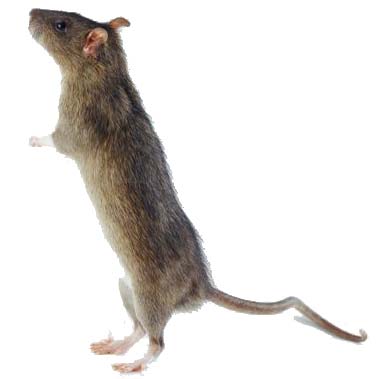
Research conducted in Italy and published in 2006 (2) has shown that not only does the drug enhance the rave experience for the user, but this works both ways, with the loud music physically enhancing the effect of the drug. Rats were given various doses of MDMA and treated to a surely exciting 4 hours of white noise at 95 dB (the loudest level permissible in Italian night clubs) while electrocortical activity in their brains was monitored by electroencephalography. Controls were conducted with rats treated with saline instead of MDMA, as well as both treatments without sound. ECoG monitoring was repeated over 5 days without administration of the drug or sound in order to study long term effects. The ECoG “spectrum power” was taken to be indicative of higher neural function in rats.

The data showed that a low dose of MDMA combined with sound caused decreased ECoG spectrum power significantly different from control, but no significant effect when MDMA was administered without sound. A high dose of MDMA combined with sound produced a dramatic effect that lasted for 5 days, while all other treatments had no long term effects. This powerful data shows a synergistic relationship between exposure to loud noise and the effect of MDMA on higher neural function, and suggests that higher doses only have long term effects when combined with loud noise. The authors do not suggest a possible mechanism for this effect, but they do warn that the drug may be more dangerous than commonly thought since most ecstasy users combine the drug with loud music.


* As a side note, some legislation around ecstasy was driven by the above mentioned discredited “findings”, which is disconcerting. An example is the RAVE act (3), introduced in 2002 by current Democratic VP candidate Joe Biden as part of the War On Drugs, which allows the law to shut down clubs and raves if ecstasy use is suspected to occur on their premises. The drug is still a dangerous one, but one would hope that laws would be revised after research they were based upon is discredited, which they were not.


References

1. Ronald Bailey: “The Agony of Ecstasy Research”. ReasonOnline.
2.
Michelangelo Iannone, Stefania Bulotta, Donatella Paolino, Maria Zito, Santo Gratteri, FrancescoS Costanzo, Domenicantonio Rotiroti (2006). Electrocortical effects of MDMA are potentiated by acoustic stimulation in rats BMC Neuroscience, 7 (1) DOI: 10.1186/1471-2202-7-13
3.
http://en.wikipedia.org/wiki/RAVE_Act

Monday, 25 June 2007

Guest article: Economics...

As we struggle through the last exams of term, I thought that leaving the 'biology bubble' for a while could be a good idea... so I have invited Miguel Faria e Castro, a promising economics student at the faculty of Economics, Universidade Nova de Lisboa (New University of Lisbon) to bring a bit of fresh air to the blog...

When the invitation to write an article for this blog first came, I felt that anything written by an Economics student would feel a bit out of place. It happens, however (and most fortunately, in my own personal opinion) that Economic Science is not restricted to, as some people think, heavy statistical paperwork and impossible mathematical models with two thousand variables. A wide, varied field, it incorporates a lot of knowledge from other scientific subjects, namely psychology, sociology, physics – even biology!

It is not my intention to bore you with sophisticated technical terms or theories which are able to explain whether you opt for a cup of tea or a chocolate bar under the right conditions. That is why I have decided, in this brief article, to give you a first glance at what really is economic science.

Curiously, the term “Economics” comes from a very picturesque Greek expression: Oikosnomos, or, in plain English, “how to take care of your house”. Coined somewhere in the ideological turmoil of the 18th century, it came as a brief, yet clear, reference to the founding pillar of the entire science, the concept of scarcity: How can I satisfy my endless needs with the limited resources that are available to me? This is commonly known as the fundamental problem of economics, this is the problem that more or less 6 billion people face every day, at every moment.

Everything gets more complicated when we notice that not only people have different interests and, therefore, different needs, but also different qualities and quantities of resources available to themselves. This was what Adam Smith, a late 18th century Scottish philosopher who is commonly recognised as the first modern economist, attempted to analyse when working in his great (quite literally, three volumes of 1,000 pages each) work: The Wealth of Nations. Basically, the entire work was a defence of two fundamental economic theories, and I am almost sure you have already heard of at least one of them somewhere: The Invisible Hand, and The Division of Labour. While the former states that each individual, while attempting to prosecute his own self-interest will ultimately contribute to the society’s greater good (or, “after all, being greedy is not that bad”), the latter is based on the principle that certain countries appear to have a natural advantage on the performance of certain tasks over others, and that the entire world would gain if each country focused on what it’s good at. Another founding father of economics, the British David Ricardo would further develop this theory, by proving, with a simple mathematical example that it would be better for both countries if Portugal only produced wine and England textiles, rather than having them producing both resources. Look in wikipedia for “Comparative Advantage” and you’ll learn a neat trick with which to impress your friends (this last part sounds quite nerd, but we were actually told it by a professor).

As with every science, new theories on how to better satisfy people’s needs appeared. The so-called Classics, which I have just mentioned, tended to follow a very liberal orientation. Throughout the 19th and 20th centuries, economics, initially seen as a weird mixture of politics, law, philosophy and mathematics, increasingly became a matter of interest for politicians – the rise of Marxism as a political ideology only happened because Karl Marx had launched the theoretical basis for his own economic principles (usually called Marxian economics, as to avoid any embarrassing confusions). Until the 20’s, economic science focused almost exclusively on the behaviour of those who produced every day’s goods and those who bought it – Consumer and Producer Theory, the basis for what is today known as Microeconomics (it studied the individual behaviour of economic agents). In 1929, however, with the Great Depression, the Western “Civilised” World was hit, for the first time in History, with widespread inflation and unemployment. Two occurrences which, as the economists of that time conceded could barely be explained by the tools that they were using.

This is where another great mind enters. An Englishman named John Maynard Keynes – a brilliant thinker (the philosopher Bertrand Russell once said that Keynes was the most intelligent man he had ever met) and fierce investor who would publish his thoughts on what had happened during the Great Depression in the United States of America and the rest of the world. His work led to the creation of an entirely new field – macroeconomics, or the study of the aggregate behaviour of all economic agents (and now the State plays a special role…) when faced with certain circumstances and conditions. Keynes was the first to identify the fact that a phenomenon such as inflation (which is, by the way, the continuous and generalised rise in the price level or, in English, the occurrence thanks to which things are much more expensive today than they were when your parents were eighteen) could never be explained by studying what an individual consumer does or a single firm does not do. Only by studying the economy as a whole, can we grasp the real magnitude of such an event. A recurring joke about economists tells you that one of the advantages of being one is that, when you are in the unemployment line, you will at least understand why you are there. Thank Mr Keynes for enlightening you on that. But enough of history.

A common misconception is that economics only deals with money. Money is, as surprising as it may seem, a very small part of this grand show. Do you eat money? Do you drink money? Do you drive money? The answer is no – money is merely the means for you to get whatever you need. This is where we get at another important concept – the Classical Dichotomy, which basically states that real, not nominal, variable are important. What is the difference? Imagine you are a happy German with a monthly income of €5,000. Then, there’s that Polish guy who makes only €5 a day. It happens, however, that an apple in Germany costs €1,000 , while the Poles can eat them for €0,5 each. Which means that, nominally, you earn €5,000. But your real wage is 5 apples, while the Pole earns 20 apples a month. His real income is four times yours, even though you nominally earn a thousand times more. Interesting, eh?

Sunday, 24 June 2007

Guest article: Decision-making

Our guest writer this week (well, maybe this will become weekly) is Christina Ieronymides, student and aspiring thylacine hunter. Hailing from Cyprus, she has just completed her BSc in Zoology at Imperial College, and will be doing her MSc at the Institute of Zoology (London Zoo) starting this autumn. Without further ado...


As a guest writer on this blog I feel the need to point out that my grasp of genetics does not extend much further than the basics, and molecular biology, in fact, is one of the subjects I tend to steer clear of. This does not mean I dislike the field; it merely indicates that I may find myself in need of a molecular geneticist friend at some point in my career.

In this article I’d like to introduce a couple of my pet subjects. The nature-nurture debate is well known to most people involved in the biological sciences, and despite all the controversy, “a bit of both” is the answer. This gives rise to the phenotypic gambit: that there is a genetic element in animal behaviour, and as such what you see is behaviour that is adaptive and under selection. This is the basis of behavioural ecology, a field to which I was first introduced by Richard Dawkins in his classic work The Selfish Gene.

In his book, Dawkins uses game theory to look at the evolutionary outcome of social interactions between individuals adopting different behaviours, and more specifically to explain how cooperation can evolve amongst social conflicts. He explains how cooperation results in the best overall outcome for the individuals involved, when a win-win outcome is possible. Cooperation is, however, a fragile state, dependent on small population size, repeated interactions over time and communication. These conditions are vulnerable to outside influences, such as immigration, population growth and change in the social circumstances.

Externalities imposed on such a system of reciprocal altruism inevitably lead to the break down of cooperation. This is the root of the Tragedy of the Commons. Open-access resources are doomed to overexploitation because people only think in the short term, and this is what we see happening in the world’s fisheries today.

Achieving sustainable resource use is only possible in the light of the incentives that individual resource users face. In the case of the bushmeat trade, conservation, development and animal welfare collide. Overexploitation of tropical forest fauna for food has both biological consequences and consequences for people. This bio-economic system operates at a number of scales (from the decisions made by an individual hunter to consumer demands and the wider economy) and is dynamic and heterogeneous (species abundances and population dynamics within the forest), and is therefore particularly difficult to tackle.

Resource management is in general complex and policies put in place to ensure sustainability are usually unsuccessful, as conservation clashes with the human element. In many cases, it is necessary to convince the public that management is worth while. Scientists are generally quite poor at communicating their knowledge to the people they are serving. This lack of communication between science and the public carries much of the blame for the distrust towards science that we see growing among lay people. Laurie Marker’s work on conservation of the cheetah in Namibia is an excellent example of understanding the social, economic and biological issues and cooperating with the locals in such a way so as to introduce acceptable and effective solutions. Marker’s work highlights the fact that accessible information, education and the fostering of trust are paramount for the successful implementation of any resource management scheme or policy.